A stroke is a serious medical condition that occurs when blood flow to the brain is interrupted, either by a blockage or bleeding in the brain. When brain cells are deprived of oxygen and nutrients, they can become damaged or die within minutes. Because different areas of the brain control different functions of the body, the effects of a stroke can vary widely depending on which part of the brain is affected.
Many stroke survivors experience physical, cognitive, and emotional challenges during recovery. Some symptoms may improve with rehabilitation, while others may require long-term support and specialized care. Understanding these common effects can help families provide better support and ensure patients receive the proper care they need.
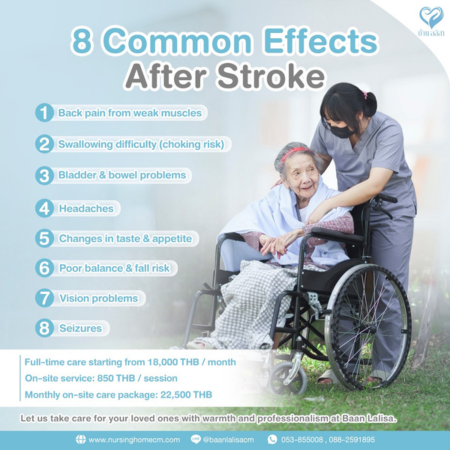
Below are 8 common effects that many patients experience after a stroke.
1. Back Pain from Weak Muscles
One common issue after a stroke is back pain, which often occurs due to muscle weakness and poor posture.
After a stroke, patients may experience weakness on one side of the body (hemiparesis). This weakness can make it difficult to sit, stand, or walk properly. As a result, the body may compensate with improper posture, placing extra strain on the spine and back muscles.
In many cases, patients spend long periods sitting or lying down during recovery. Without proper support and rehabilitation exercises, this can lead to:
- – Muscle stiffness
- – Poor spinal alignment
- – Chronic back discomfort
- – Reduced mobility
Physical therapy and regular posture adjustments are essential to help stroke patients regain strength and prevent long-term pain.
2. Difficulty Swallowing (Dysphagia)
Swallowing difficulties, medically known as dysphagia, are very common after a stroke. This happens when the muscles responsible for swallowing become weak or uncoordinated due to brain damage.
When swallowing becomes difficult, patients may experience:
- Choking when eating or drinking
- Coughing during meals
- Food remaining in the mouth
- Difficulty controlling saliva
This condition can be dangerous because it increases the risk of aspiration, where food or liquid enters the airway instead of the stomach. Aspiration can lead to serious complications such as aspiration pneumonia.
In addition, patients who struggle to swallow may eat less, leading to malnutrition and dehydration.
Specialized care, including speech therapy and modified diets, is often required to ensure safe swallowing.
3. Bowel and Bladder Problems
Stroke can affect the brain’s ability to control bowel and bladder functions. As a result, patients may experience:
- – Urinary incontinence
- – Frequent urination
- – Difficulty controlling bowel movements
- – Constipation
These issues can occur because the brain signals that control bladder and bowel muscles become disrupted.
For patients, these problems can be uncomfortable and may cause emotional distress or embarrassment. However, with proper care plans, scheduled toileting, and medical support, these symptoms can often be managed effectively.
Professional caregivers are trained to handle these situations with dignity and sensitivity, helping maintain the patient’s comfort and hygiene.
4. Headaches
Some stroke survivors experience frequent headaches during recovery.
These headaches can occur due to several factors, including:
- – Changes in blood vessels in the brain
- – Stress and emotional strain
- – Side effects from medications
- – Muscle tension in the neck and shoulders
While mild headaches may be manageable, persistent or severe headaches should always be monitored by healthcare professionals to rule out complications.
Proper medical supervision helps ensure that the patient’s recovery remains safe and stable.
5. Changes in Taste and Appetite
Another lesser-known effect after stroke is changes in taste and smell.
Damage to certain areas of the brain can alter how patients perceive flavors. Foods may taste bland, metallic, or completely different than before. This can lead to:
- – Loss of appetite
- – Reduced interest in eating
- – Weight loss
- – Nutritional deficiencies
Since proper nutrition is essential for recovery, caregivers must monitor dietary intake carefully. Preparing appealing meals, adjusting food textures, and ensuring balanced nutrition are important steps in maintaining the patient’s health.
6. Poor Balance and Risk of Falling
Balance problems are one of the most common physical effects after stroke.
Because the brain controls coordination and movement, damage can cause:
- – Unsteady walking
- – Difficulty standing up
- – Loss of coordination
- – Increased risk of falling
Falls can lead to serious injuries such as fractures or head trauma, which can significantly delay recovery.
To reduce these risks, stroke patients often need:
- – Mobility assistance
- – Walking aids
- – Supervised rehabilitation exercises
- – Safe living environments
Professional caregivers play an important role in ensuring patient safety during daily activities.
7. Vision Problems
Stroke can affect the areas of the brain responsible for vision, leading to several visual disturbances.
Common vision problems after stroke include:
- – Blurred vision
- – Double vision
- – Loss of peripheral vision
- – Difficulty focusing
Some patients may also have trouble judging distances or recognizing objects.
These vision issues can make everyday tasks more difficult and increase the risk of accidents. Eye specialists and rehabilitation programs can help patients adapt and improve visual function when possible.
8. Seizures
In some cases, stroke survivors may develop seizures, which occur when abnormal electrical activity happens in the brain.
Post-stroke seizures may occur shortly after the stroke or even months later. Symptoms may include:
- – Sudden muscle spasms
- – Loss of consciousness
- – Confusion
- – Uncontrolled movements
Although seizures can be alarming, they can often be managed with medication and proper medical supervision.
Continuous monitoring and professional care are important to ensure patient safety.
The Importance of Specialized Post-Stroke Care
Recovering from a stroke is a complex process that often requires long-term rehabilitation and specialized support.
Every symptom described above requires careful monitoring and professional care to ensure:
- – Patient safety
- – Faster recovery
- – Prevention of complications
- – Improved quality of life
Stroke survivors often benefit from structured care programs that include physical therapy, medical supervision, nutrition management, and emotional support.
Trusted Stroke Recovery Support at Baan Lalisa
At Baan Lalisa Care Services in Chiang Mai, we provide compassionate and professional care for stroke survivors and elderly individuals who need assistance in daily life.
Our team understands the challenges that patients and families face during stroke recovery. We focus on providing a safe environment, personalized care plans, and supportive rehabilitation to help patients regain comfort and dignity.
We also warmly welcome international families seeking trusted long-term care for their loved ones in Thailand.
Our Care Services
👩⚕️ Full-time care starting from 18,000 THB per month
🚗 On-site care service: 850 THB per session
📅 Monthly on-site care package: 22,500 THB
Contact Baan Lalisa Chiang Mai
📍 Visit or contact us to learn more about our care programs or schedule a consultation.
Phone:
053-855008
088-2591895
LINE:
https://lin.ee/cJwaF2g
or @baanlalisacm
Location Map:
https://goo.gl/maps/6GXQPqhvgZ1aMWLS7
Let Us Care for Your Loved Ones
Recovery after stroke requires patience, compassion, and professional care. At Baan Lalisa, we are dedicated to providing warm, attentive, and expert support for every patient.
Let us help your loved ones recover safely and live with dignity, comfort, and the highest possible quality of life.
#BaanLalisa #ChiangMaiNursingHome #SeniorCare #ElderlyCare #LongTermCare #StrokeRecovery #PostStrokeCare #HealthcareServices