เมื่ออุณหภูมิสูงขึ้นในช่วงหน้าร้อน ผู้สูงอายุและผู้ป่วยโรคหลอดเลือดสมอง หรือ Stroke ถือเป็นกลุ่มเสี่ยงที่ต้องได้รับการดูแลอย่างใกล้ชิดมากเป็นพิเศษ เพราะร่างกายของผู้ป่วยมักปรับตัวต่อสภาพอากาศได้ยากกว่าคนทั่วไป โดยเฉพาะผู้ที่ช่วยเหลือตัวเองไม่ได้ ผู้ป่วยติดเตียง หรือผู้ที่มีโรคประจำตัวร่วม เช่น เบาหวาน ความดันโลหิตสูง และโรคหัวใจ
หลายครอบครัวอาจไม่ทราบว่า อากาศร้อนสามารถกระตุ้นให้เกิดภาวะแทรกซ้อนรุนแรงได้ เช่น ภาวะขาดน้ำ ความดันโลหิตแปรปรวน ฮีทสโตรก แผลกดทับ หรือแม้แต่การเกิด Stroke ซ้ำ หากไม่ได้รับการดูแลอย่างเหมาะสม
บทความนี้จะพาไปเจาะลึกวิธีดูแลผู้ป่วย Stroke ในช่วงหน้าร้อนอย่างละเอียด ครอบคลุมทั้งการดูแลด้านร่างกาย อาหาร สิ่งแวดล้อม การฟื้นฟูสมรรถภาพ รวมถึงแนวทางที่ครอบครัวและศูนย์ดูแลผู้สูงอายุควรรู้ เพื่อให้ผู้ป่วยปลอดภัยและมีคุณภาพชีวิตที่ดีที่สุด
ทำความเข้าใจโรค Stroke และผลกระทบในผู้สูงอายุ
Stroke หรือโรคหลอดเลือดสมอง เป็นภาวะที่สมองขาดเลือดไปเลี้ยง หรือเกิดเส้นเลือดในสมองแตก ส่งผลให้เซลล์สมองเสียหายอย่างรวดเร็ว ผู้ป่วยมักมีอาการแขนขาอ่อนแรง พูดไม่ชัด เดินไม่ได้ หรือสูญเสียความสามารถในการช่วยเหลือตัวเอง
ในผู้สูงอายุ ภาวะ Stroke มักส่งผลระยะยาว ทำให้ต้องพึ่งพาผู้อื่นในการใช้ชีวิตประจำวัน หลายรายกลายเป็นผู้ป่วยติดเตียง จำเป็นต้องได้รับการดูแลอย่างต่อเนื่องจากครอบครัว ศูนย์ดูแลผู้ป่วยติดเตียง หรือบ้านพักคนชรา
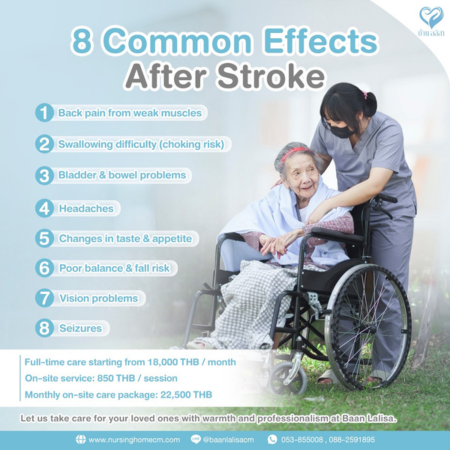
อาการที่พบบ่อยหลังเกิด Stroke
- – แขนขาอ่อนแรงครึ่งซีก
- – กลืนลำบาก
- – พูดไม่ชัด
- – ความจำลดลง
- – เดินลำบาก
- – กล้ามเนื้อเกร็ง
- – ควบคุมการขับถ่ายไม่ได้
อาการเหล่านี้ทำให้ผู้ป่วยมีความเสี่ยงต่อภาวะแทรกซ้อนเพิ่มขึ้น โดยเฉพาะในสภาพอากาศร้อนจัด
ทำไมหน้าร้อนจึงอันตรายสำหรับผู้ป่วย Stroke?
หน้าร้อนส่งผลต่อระบบไหลเวียนโลหิตและสมดุลของน้ำในร่างกายโดยตรง ซึ่งเป็นปัจจัยสำคัญสำหรับผู้ป่วย Stroke
1. ภาวะขาดน้ำ (Dehydration)
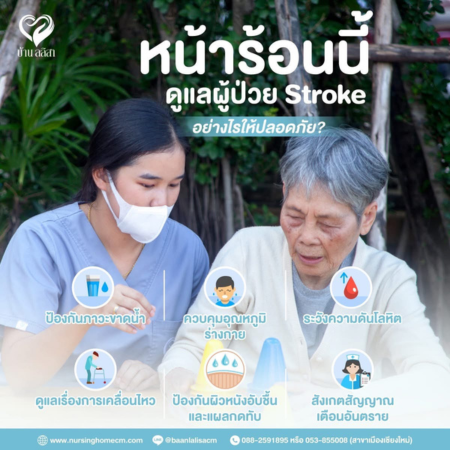
เมื่ออากาศร้อน ร่างกายจะสูญเสียน้ำผ่านเหงื่อมากขึ้น หากผู้ป่วยดื่มน้ำน้อย เลือดจะข้นขึ้น เพิ่มความเสี่ยงต่อการเกิดลิ่มเลือด และอาจนำไปสู่ Stroke ซ้ำได้
ผู้สูงอายุจำนวนมากมักไม่รู้สึกกระหายน้ำ แม้ร่างกายกำลังขาดน้ำ จึงต้องได้รับการกระตุ้นให้ดื่มน้ำอย่างสม่ำเสมอ
2. ความดันโลหิตแปรปรวน
อากาศร้อนทำให้หลอดเลือดขยายตัว ความดันโลหิตอาจลดลงกะทันหัน ผู้ป่วยอาจมีอาการหน้ามืด อ่อนเพลีย หรือหมดสติได้
3. ฮีทสโตรก (Heat Stroke)
ผู้ป่วย Stroke มีระบบควบคุมอุณหภูมิร่างกายที่ไม่สมบูรณ์ จึงเสี่ยงต่อภาวะฮีทสโตรก ซึ่งอาจเป็นอันตรายถึงชีวิต
4. แผลกดทับและการติดเชื้อ
ความร้อนและความชื้นทำให้ผิวหนังอับชื้น เกิดแผลกดทับได้ง่าย โดยเฉพาะในผู้ป่วยติดเตียงที่เคลื่อนไหวไม่ได้
วิธีดูแลผู้ป่วย Stroke ในช่วงหน้าร้อนอย่างถูกต้อง
การดูแลผู้ป่วย Stroke ในช่วงหน้าร้อนจำเป็นต้องใส่ใจในหลายด้าน ทั้งสภาพแวดล้อม โภชนาการ สุขอนามัย และการเฝ้าระวังอาการผิดปกติ
ดูแลอุณหภูมิภายในบ้านให้เหมาะสม
ควรรักษาอุณหภูมิห้องให้อยู่ในระดับที่สบาย ไม่ร้อนอบอ้าว
แนวทางที่ควรทำ ได้แก่
- – เปิดพัดลมหรือเครื่องปรับอากาศ
- – ให้อากาศถ่ายเทสะดวก
- – หลีกเลี่ยงการให้ผู้ป่วยอยู่กลางแดด
- – ปิดม่านลดความร้อนในช่วงบ่าย
- – เลือกเสื้อผ้าระบายอากาศดี
สำหรับศูนย์ดูแลผู้สูงอายุและบ้านพักคนชรา ควรมีระบบระบายอากาศที่ได้มาตรฐาน และมีเจ้าหน้าที่คอยสังเกตอาการผิดปกติอย่างใกล้ชิด
ให้ผู้ป่วยดื่มน้ำเพียงพอ
น้ำมีความสำคัญอย่างมากต่อระบบไหลเวียนโลหิต
วิธีดูแลเรื่องการดื่มน้ำ
- – ให้จิบน้ำบ่อย ๆ ตลอดวัน
- – หลีกเลี่ยงเครื่องดื่มหวานจัด
- – จำกัดชา กาแฟ และแอลกอฮอล์
- – หากกลืนลำบาก ควรใช้น้ำข้นตามคำแนะนำแพทย์
ผู้ดูแลควรสังเกตอาการขาดน้ำ เช่น
- – ปากแห้ง
- – ปัสสาวะสีเข้ม
- – ง่วงซึม
- – เวียนศีรษะ
- – อ่อนแรงผิดปกติ
เลือกอาหารที่เหมาะกับอากาศร้อน
ผู้ป่วย Stroke ควรได้รับอาหารที่ย่อยง่าย สดสะอาด และมีประโยชน์
อาหารที่แนะนำ
- – ผักและผลไม้สด
- – อาหารอ่อนย่อยง่าย
- – โปรตีนไขมันต่ำ
- – ปลาและธัญพืช
อาหารที่ควรหลีกเลี่ยง
- – อาหารเค็มจัด
- – ของทอด
- – อาหารไขมันสูง
- – อาหารค้างคืน
ในศูนย์ดูแลผู้ป่วยติดเตียง มักมีนักโภชนาการช่วยวางแผนเมนูให้เหมาะกับผู้ป่วยแต่ละราย ช่วยลดความเสี่ยงจากภาวะแทรกซ้อน
การป้องกันแผลกดทับในช่วงหน้าร้อน
แผลกดทับเป็นปัญหาสำคัญในผู้ป่วยติดเตียง โดยเฉพาะช่วงอากาศร้อน
วิธีลดความเสี่ยงแผลกดทับ
- – พลิกตัวทุก 2 ชั่วโมง
- – ใช้ที่นอนลม
- – ดูแลผิวหนังให้แห้งสะอาด
- – ซับเหงื่อบ่อย ๆ
- – หลีกเลี่ยงเสื้อผ้าหนาเกินไป
หากพบรอยแดงหรือผิวหนังเริ่มถลอก ควรรีบปรึกษาแพทย์ทันที
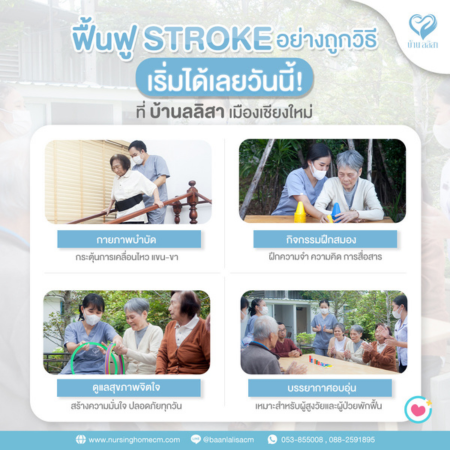
การฟื้นฟูร่างกายในหน้าร้อน
แม้จะเป็นช่วงอากาศร้อน แต่ผู้ป่วย Stroke ยังจำเป็นต้องทำกายภาพบำบัดอย่างต่อเนื่อง
1. ช่วงเวลาที่เหมาะสำหรับการทำกายภาพ
- – ช่วงเช้า
- – ช่วงเย็น
- – หลีกเลี่ยงช่วงแดดจัด
2. การออกกำลังกายเบา ๆ
- – ขยับแขนขา
- – ฝึกเดิน
- – ฝึกกล้ามเนื้อ
- – ฝึกการทรงตัว
การฟื้นฟูอย่างต่อเนื่องช่วยลดภาวะกล้ามเนื้อลีบและเพิ่มคุณภาพชีวิตผู้ป่วยได้อย่างมาก
สัญญาณอันตรายที่ต้องรีบพบแพทย์
ผู้ดูแลควรเฝ้าระวังอาการผิดปกติอย่างใกล้ชิด
อาการที่ไม่ควรมองข้าม
- – ตัวร้อนมาก
- – ซึมลง
- – หายใจเร็ว
- – ความดันผิดปกติ
- – แขนขาอ่อนแรงเพิ่มขึ้น
- – พูดไม่ชัดมากกว่าเดิม
- – ชัก
- – หมดสติ
หากพบอาการเหล่านี้ ควรรีบนำส่งโรงพยาบาลทันที
การดูแลด้านอารมณ์และจิตใจของผู้ป่วย Stroke
ผู้ป่วยจำนวนมากมีภาวะซึมเศร้าหลังเกิด Stroke โดยเฉพาะเมื่อช่วยเหลือตัวเองได้น้อยลง
วิธีดูแลด้านจิตใจ
- – พูดคุยให้กำลังใจ
- – เปิดโอกาสให้ทำกิจกรรมง่าย ๆ
- – ให้ครอบครัวมีส่วนร่วม
- – สร้างบรรยากาศผ่อนคลาย
บ้านพักคนชราและศูนย์ดูแลผู้สูงอายุที่มีนักกิจกรรมบำบัด จะช่วยให้ผู้ป่วยมีสุขภาพจิตที่ดีขึ้นได้
ครอบครัวควรเลือกศูนย์ดูแลผู้สูงอายุแบบไหน?
หลายครอบครัวอาจไม่มีเวลาดูแลผู้ป่วย Stroke ตลอด 24 ชั่วโมง การเลือกศูนย์ดูแลผู้สูงอายุที่มีมาตรฐานจึงเป็นทางเลือกสำคัญ
สิ่งที่ควรพิจารณา
1. มีทีมพยาบาลดูแลตลอดเวลา
ผู้ป่วย Stroke อาจเกิดเหตุฉุกเฉินได้ทุกเมื่อ จึงควรมีบุคลากรทางการแพทย์ดูแลใกล้ชิด
2. มีบริการกายภาพบำบัด
การฟื้นฟูเป็นหัวใจสำคัญในการดูแลผู้ป่วยโรคหลอดเลือดสมอง
3. ดูแลผู้ป่วยติดเตียงได้
ศูนย์ดูแลผู้ป่วยติดเตียงควรมีอุปกรณ์ครบ เช่น
- – เตียงไฟฟ้า
- – ที่นอนลม
- – เครื่องดูดเสมหะ
4. สภาพแวดล้อมสะอาด ปลอดภัย
โดยเฉพาะในหน้าร้อน ต้องมีระบบระบายอากาศดี ลดความเสี่ยงติดเชื้อ
ข้อดีของศูนย์ดูแลผู้สูงอายุในการดูแลผู้ป่วย Strok
การดูแลผู้ป่วย Stroke ต้องใช้ทั้งเวลา ความรู้ และประสบการณ์ ซึ่งศูนย์ดูแลผู้สูงอายุสามารถตอบโจทย์ได้ในหลายด้าน
1. มีผู้เชี่ยวชาญดูแลอย่างใกล้ชิด
ทั้งพยาบาล นักกายภาพบำบัด และผู้ช่วยดูแลผู้สูงอายุ
2. ลดภาระของครอบครัว
ช่วยให้ญาติสามารถทำงานหรือใช้ชีวิตประจำวันได้โดยไม่ต้องกังวลตลอดเวลา
3. ลดความเสี่ยงภาวะแทรกซ้อน
เพราะมีการติดตามอาการอย่างต่อเนื่อง
4. ส่งเสริมคุณภาพชีวิตผู้ป่วย
ผู้ป่วยได้รับกิจกรรม ฟื้นฟูร่างกาย และดูแลด้านจิตใจอย่างเหมาะสม
การดูแลผู้ป่วยติดเตียงในช่วงหน้าร้อน
ผู้ป่วยติดเตียงถือเป็นกลุ่มที่ต้องเฝ้าระวังมากที่สุด
1. การรักษาความสะอาด
- – อาบน้ำสม่ำเสมอ
- – เปลี่ยนเสื้อผ้าทันทีเมื่อเปียกเหงื่อ
- – ดูแลช่องปากและผิวหนัง
2. ป้องกันการติดเชื้อ
หน้าร้อนทำให้เชื้อโรคเติบโตได้ง่าย ควรดูแลความสะอาดอุปกรณ์และสิ่งแวดล้อมอย่างเคร่งครัด
3. การดูแลระบบทางเดินหายใจ
ผู้ป่วยบางรายมีเสมหะมาก ควรจัดท่านอนที่เหมาะสม และดูดเสมหะเมื่อจำเป็น
เทคนิคการดูแลผู้สูงอายุในหน้าร้อนสำหรับผู้ดูแลมือใหม่
การดูแลผู้สูงอายุในช่วงอากาศร้อนจำเป็นต้องอาศัยความใส่ใจเป็นพิเศษ
1. เช็กอุณหภูมิร่างกายทุกวัน
หากพบว่ามีไข้หรือร้อนผิดปกติ ควรรีบพบแพทย์
2. สังเกตพฤติกรรมผิดปกติ
เช่น ง่วงซึม ไม่กินอาหาร หรือพูดน้อยลง
3. จัดสภาพแวดล้อมให้น่าอยู่
ผู้สูงอายุจะรู้สึกผ่อนคลายมากขึ้นเมื่ออยู่ในสถานที่สะอาด เย็น และปลอดภัย
คำแนะนำสำหรับครอบครัวที่ดูแลผู้ป่วย Stroke ที่บ้าน
การดูแลที่บ้านสามารถทำได้ หากครอบครัวมีความพร้อมและความรู้เพียงพอ
1. จัดตารางดูแลชัดเจน
- – เวลาทานยา
- – เวลาอาหาร
- – เวลากายภาพ
- – เวลาพักผ่อน
2. เตรียมอุปกรณ์จำเป็น
- – เตียงผู้ป่วย
- – รถเข็น
- – ที่นอนลม
- – เครื่องวัดความดัน
3. มีเบอร์ฉุกเฉินพร้อมติดต่อ
เพื่อรับมือกรณีเกิดเหตุฉุกเฉิน
เทคโนโลยีกับการดูแลผู้สูงอายุยุคใหม่
ปัจจุบันมีเทคโนโลยีช่วยดูแลผู้สูงอายุจำนวนมาก
1. อุปกรณ์ติดตามสุขภาพ
เช่น
- – เครื่องวัดความดัน
- – Smart Watch
- – เครื่องวัดออกซิเจนปลายนิ้ว
2. ระบบแจ้งเตือนฉุกเฉิน
ช่วยให้ครอบครัวอุ่นใจมากขึ้น
3. Telemedicine
ผู้ป่วยสามารถปรึกษาแพทย์ออนไลน์ได้ ลดการเดินทางช่วงอากาศร้อน
ทำไมการดูแลต่อเนื่องจึงสำคัญสำหรับผู้ป่วย Stroke?
Stroke ไม่ใช่โรคที่รักษาเพียงระยะสั้น แต่ต้องอาศัยการดูแลระยะยาว
1. ลดโอกาสเกิด Stroke ซ้ำ
ด้วยการควบคุมปัจจัยเสี่ยงอย่างต่อเนื่อง
2. ฟื้นฟูสมรรถภาพร่างกาย
ยิ่งเริ่มฟื้นฟูเร็ว โอกาสกลับมาใช้ชีวิตได้ยิ่งสูง
3. ลดภาวะแทรกซ้อน
เช่น ปอดติดเชื้อ แผลกดทับ และภาวะซึมเศร้า
ดูแลผู้ป่วย Stroke หน้าร้อนอย่างไรให้ปลอดภัยและมีคุณภาพชีวิตที่ดี
หน้าร้อนเป็นช่วงเวลาที่ผู้ป่วย Stroke ต้องได้รับการดูแลอย่างใกล้ชิด เพราะความร้อนสามารถกระตุ้นให้เกิดภาวะแทรกซ้อนรุนแรงได้ ทั้งภาวะขาดน้ำ ฮีทสโตรก ความดันโลหิตผิดปกติ และแผลกดทับ
การดูแลที่เหมาะสมควรครอบคลุมทั้งด้านร่างกาย จิตใจ โภชนาการ และสภาพแวดล้อม ไม่ว่าจะเป็นการให้ดื่มน้ำเพียงพอ ควบคุมอุณหภูมิ ดูแลความสะอาด ทำกายภาพบำบัด และเฝ้าระวังอาการผิดปกติ
สำหรับครอบครัวที่ไม่มีเวลาดูแลเต็มเวลา การเลือกศูนย์ดูแลผู้สูงอายุ ศูนย์ดูแลผู้ป่วยติดเตียง หรือบ้านพักคนชราที่มีมาตรฐาน ถือเป็นอีกหนึ่งทางเลือกสำคัญที่จะช่วยให้ผู้ป่วยได้รับการดูแลอย่างปลอดภัยต่อเนื่อง
ท้ายที่สุด สิ่งสำคัญที่สุดคือ “ความใส่ใจ” เพราะแม้การดูแลผู้ป่วย Stroke จะไม่ใช่เรื่องง่าย แต่การได้รับการดูแลอย่างถูกต้องและอบอุ่นจากคนรอบข้าง จะช่วยให้ผู้ป่วยมีคุณภาพชีวิตที่ดีขึ้น และใช้ชีวิตได้อย่างมีความสุขแม้ในช่วงหน้าร้อนก็ตาม